
Nicholas Chuan is a campus ministry worker, and he also had the chance to be on our Traineeship. He shares how this Traineeship experience has shaped and aided his work.
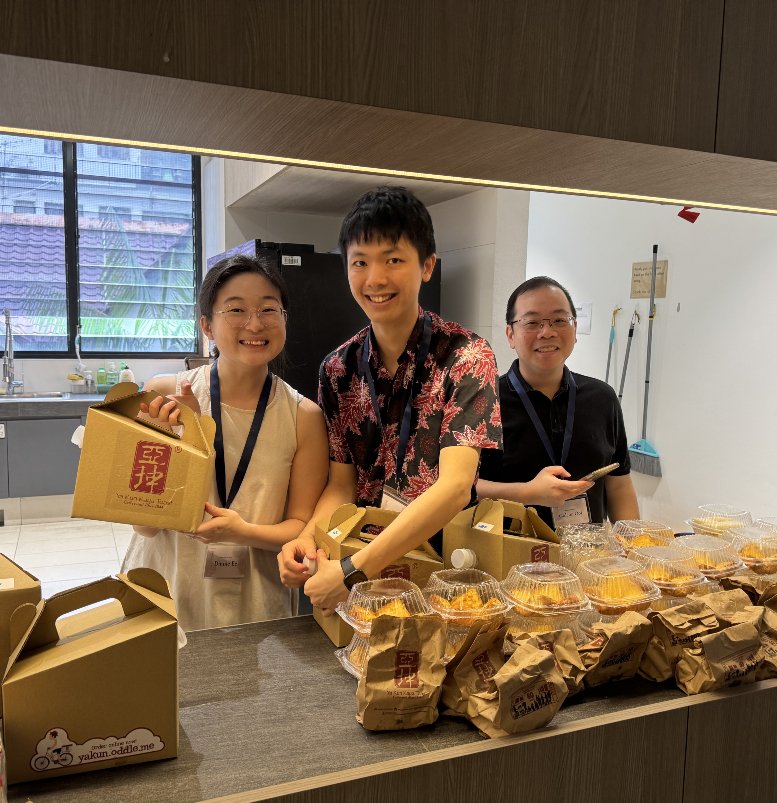
Nicholas (middle) with his wife Dinnie (left) and Gideon (right), helping out at our Weekender.
Since this July, Dinnie (my wife) and I have been serving as trainees in GBC. Our goal was to grow our relationships with the church and its leadership to explore more avenues for service, and for me personally to take time to think about how to involve local churches in my main role as a staff worker in the Singapore Institute of Technology Christian Fellowship (SITCF), a university campus ministry. It has been a busy few months juggling my work at SITCF with the traineeship, but I am thankful for the fruit born from dedicating time to the traineeship!
Learning more about the local church
As Eng Ching has already described the traineeship in her article last week, I will focus on my personal experience. Overall, I have been struck by the humble prayerfulness of the church staff and eldership. Over the years, I have attended various meetings in Christian organisations, but our staff and elders spend more time intentionally praying for us members and the affairs of the church than I have ever seen. I am thankful that as competent as they are, they are not ultimately relying on their own skills and intellect for the Lord’s work, but on the Lord himself. This was also confirmed in the many meetups the trainees were able to have with the elders, deacons, and staff. I hope and pray that I may emulate their humble prayerfulness in my own life and ministry.
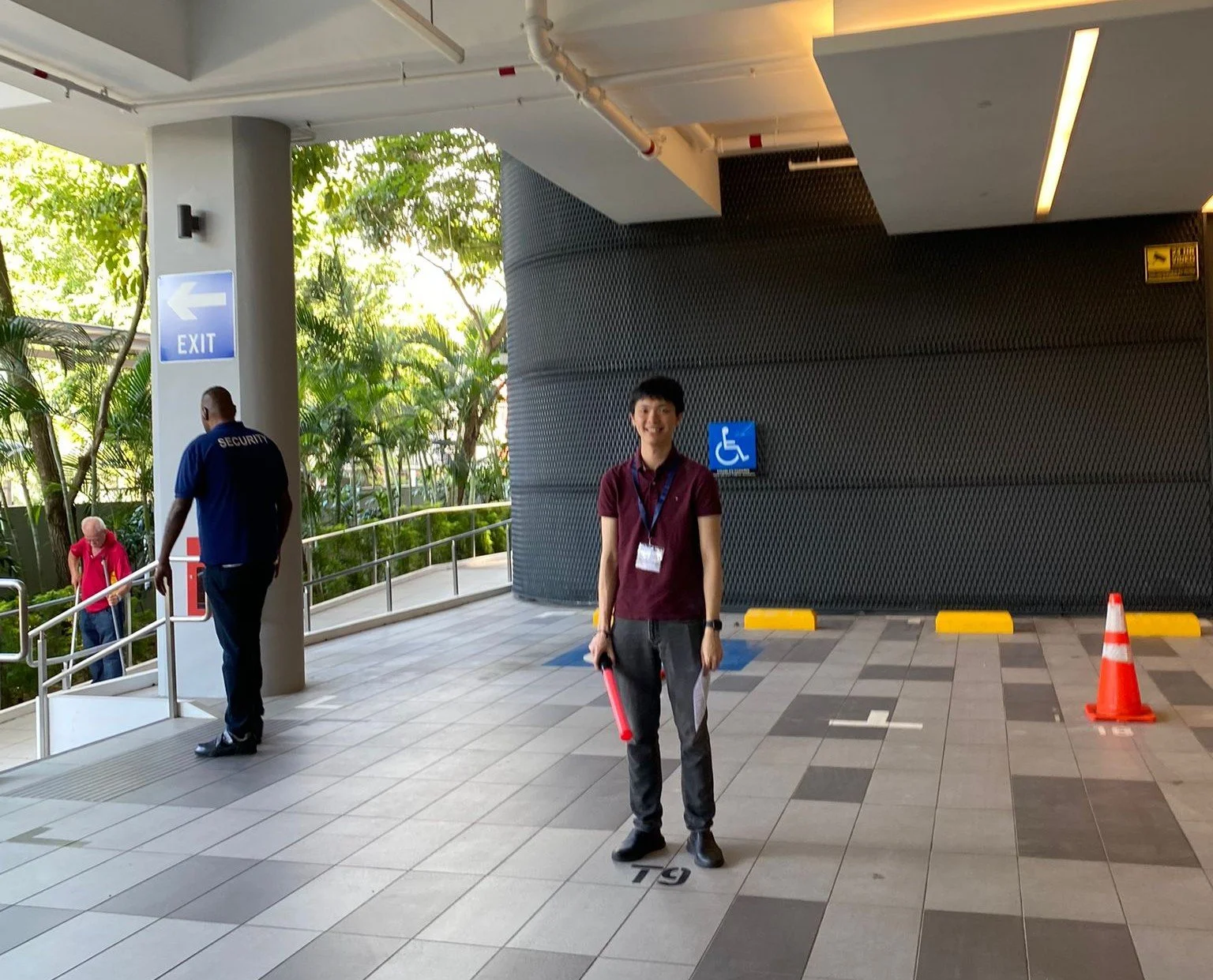
Say hi if you meet Nicholas while he’s on FIT duty!
I have also had the joy and privilege to assist Pastor Jeremy in setting up the First Impressions Team (FIT), the volunteers you see at Level 1 greeting you and directing vehicle traffic. Hopefully, we have been able to provide a warmer welcome to you at church, as well as smoothen traffic flow to lessen jams and prevent backflow onto Mattar Road. Personally, I am grateful for this opportunity to build new and existing relationships with GBC members. Thank you also to the many members who have intentionally expressed gratitude for how we serve the church in this way!
Of the 25 books we read over these past five months, I was most impacted by The Priority of Preaching by Christopher Ash. Ash establishes the centrality of preaching in the church, the biblically prescribed method of word ministry. God’s people have always gathered under the preached word, and this is how God has designed for us to receive His truth corporately. It was convicting for me to come to terms with how Bible studies can alienate the illiterate, the functionally illiterate, the less-educated, and those less confident in studying a text. I appreciate how GBC rightly emphasises one-to-one Bible reading, but also takes a wider view of discipling, where we seek to do spiritual good to one another, perhaps by reading a Christian book together, having spiritual conversations, and/or praying for one another. Likewise, while I deeply treasure the Bible-reading relationships I share with several brothers in GBC, I also pray that I do not unwittingly alienate other brothers who might be less confident in doing so. I can lean on the primary mode of discipling in the church: the preached Word, and simply have conversations with others on their takeaways and reflections. This, too, is speaking the truth in love, that God promises grows the church into maturity (Eph 4).
Parachurch as Partners
Yet, my biggest takeaway from the traineeship is how I have grown as a parachurch worker who is first and foremost for the local church. Parachurch ministries can easily fall into the pitfall of taking its members away from their local churches. This is often well-intended, with parachurch workers wanting to invest more into the spiritual health of their members. Sometimes, it is also an existential issue, where we need to show our financial supporters the growing work we do to appeal for them to continue supporting the work.
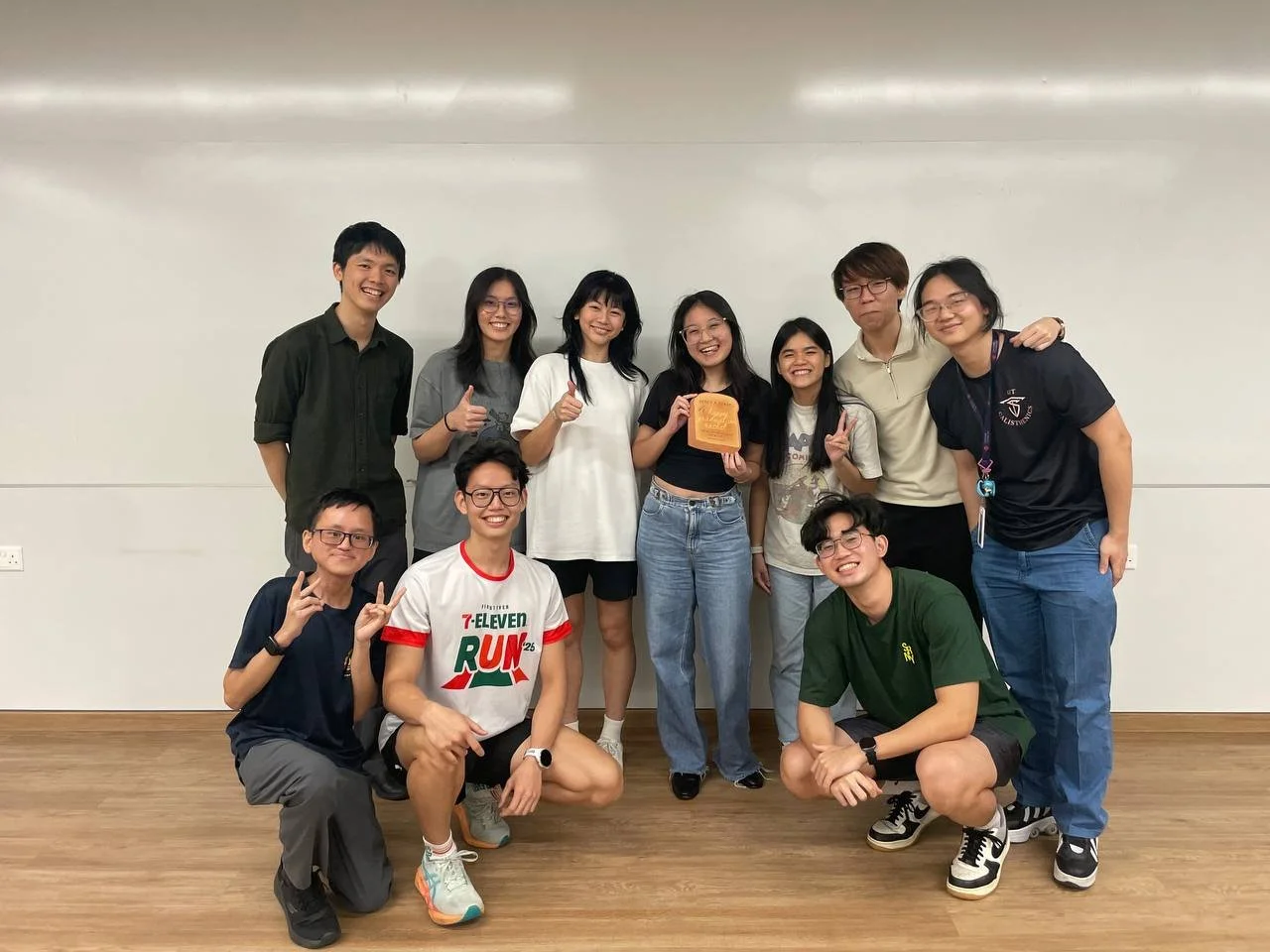
Nicholas with the students from SITCF.
Therefore, as someone who is absolutely convinced that the local church is God’s primary means of discipling his people, I have had to wrestle with how this conviction would shape my ministry at SITCF. The traineeship has been a helpful avenue for me to work these things out as we read and discussed many books on the church. Shoutout to Pastor Eugene and my fellow trainees who have been helpful and encouraging sounding boards as I work out these principles and their practical implications. As I elaborate on where I have landed, please know that I love, affirm, and continue to joyfully collaborate with my fellow parachurch workers whose ministry convictions differ from mine. We are all serving the same King Jesus.
Fundamentally, I have solidified my view of SITCF as being first and foremost in gospel partnership with local churches in Singapore. Our aim, aligned to the definition of missions in Prioritizing the Church in Missions by John Folmar and Scott Logsdon, is to strengthen local churches as we teach God’s word to Christians and proclaim God’s word to non-Christians. Our Bible studies are thus aimed at equipping Christian students to grow as members of their local churches and as evangelists on campus. Aware that there are often non-Christians in our midst, I also intentionally make the gospel clear to them. I regularly remind SITCF students that they should not find their primary spiritual community with us, and exhort them to regularly gather with their local church, assisting them where that may be difficult. I also tell them that I am not a “campus pastor,” as that biblical office is reserved for the church, SITCF is not a local church, and they have not elected me into this office.
In my meetups with students, I regularly ask them how what we are doing in SITCF equips them in their church life, usually as they participate in or lead bible studies in their own small groups or as they serve in children or youth ministry, as well as in their evangelism on campus. A reality of this stage of life for many who have grown up in church is that they are starting to own their faith as their own, and it is not unheard of that this may lead to them changing churches for their own spiritual growth. As students invariably bring up this topic with me, I seek to slow down their decision-making process (assuming they belong to a true, gospel-preaching church), by advising them to start conversations with their leaders while they can still be persuaded to stay, rather than only informing them after they have decided to leave.
Unfortunately, parachurch organisations are easily viewed with suspicion by local churches. Hence, I have also been intentionally seeking to grow my relationship with relevant local churches in an open-handed manner. This includes Gospel Light Christian Church in Punggol near to SIT, who has been generously supporting our work by providing us a venue for our welcome day event and exploring other collaborative avenues. I have also started to reach out to the pastors of the local churches to which my student leaders belong so that I can more effectively partner them in discipling the student leaders and grow their trust. As we look towards potentially hiring other staff, I hope to set a hiring policy for SITCF staff that requires a formal affirmation from their local church, and for the organisation to have regular contact with their pastors.
Much of what I have described is only comprehensible when one has a high view of the local church, and an appropriate one of parachurch ministries. I resonate with Andy Johnson’s description of parachurch ministries as bridesmaids for the bride of Christ, the church. As the traineeship concludes this month, I am thankful for this opportunity I have had to gain clarity over how I can rightly lead SITCF to play that role as a bridesmaid and not the bride. Please pray for me to grow in humble wisdom as I continue to lead this ministry! Pray also for me to continue to prioritise my evangelistic witness on campus, and that I would seek not merely to make converts, but direct them to local churches where they can thrive by God’s design.